
Reviewed · WALKING TOURS
Melbourne: Aboriginal Heritage Walking Tour
Melbourne’s Aboriginal story comes into focus along the Yarra, known to the Kulin peoples as the Birrarung. This one-hour experience links Birrarung Wilam’s public art with a hands-on visit to the Koorie Heritage Trust, giving you both an outdoor introduction and time with cultural objects.
I like the small group size, limited to 10 people, and the chance to handle Aboriginal tools, shields, and possum-skin cloaks rather than only look at them behind glass. I also like the clear central meeting point at Federation Square. The main caution is that this is a short cultural activity, not a long city walk, and the quality may depend heavily on the individual guide.
In This Review
- Key points
- Starting at Federation Square at 1:00 PM
- Walking toward Birrarung Wilam and the river
- Understanding Birrarung Marr and the Kulin Nation
- Returning to the Koorie Heritage Trust
- What the one-hour format really gives you
- How much value do you get for $28?
- Who will enjoy this most?
- Practical advice before you go
- Should you book the Birrarung Wilam Walk?
- FAQ
- Where does the Aboriginal Heritage Walking Tour meet?
- What time does the tour start?
- How long does the activity last?
- What language is the tour conducted in?
- How large is the group?
- What places does the tour visit?
- What can I see or handle at the Koorie Heritage Trust?
- Is the activity suitable for children?
- What should I bring?
- Can I cancel the booking?
Key points
- Birrarung Wilam means River Camp, a fitting name for the Aboriginal art installations beside Melbourne’s river.
- Birrarung Marr means Beside the river of mists, connecting the modern park with older Kulin stories and place names.
- The Koorie Heritage Trust visit is hands-on, with tools, shields, and possum-skin cloaks available for guided handling.
- The tour runs daily at 1:00 PM, making it easy to fit around a morning in central Melbourne.
- Groups are capped at 10 people, a useful size for questions and close attention to objects.
- The one-hour length keeps the commitment modest, but it also limits how far you walk and how much history can be covered.
Starting at Federation Square at 1:00 PM
You meet at the Koorie Heritage Trust, on Level 1 of The Birrarung Building at Federation Square. Go to reception rather than waiting outside and hoping to spot a guide. The tour is conducted in English and begins at 1:00 PM each day.
This location is practical. Federation Square is one of Melbourne’s easiest central meeting points, with plenty of landmarks around it and a direct connection to the riverfront. If you have already spent the morning exploring the city center, you can reach the tour without arranging extra transport.
The guide leads a group of no more than 10 people. That limit matters here. Cultural questions can be personal and specific, and a small group gives you a better chance to hear the explanation and ask about an object or story. It also means the experience should feel more like a guided conversation than a large sightseeing procession.
Bring comfortable shoes, sunscreen, and water. The walking distance is limited, but part of the activity takes place outdoors, and Melbourne’s sun can be strong even during a short outing.
More history tours in Melbourne:
- Ultimate Melbourne Walking Tour: History, Laneways & Culture
★ 5.0 · 1,451 reviews - Puffing Billy Railway: Heritage Steam Train Journey
★ 4.6 · 1,195 reviews - Ultimate Melbourne Walking Tour: History, Laneways & Culture
★ 4.8 · 338 reviews
Walking toward Birrarung Wilam and the river
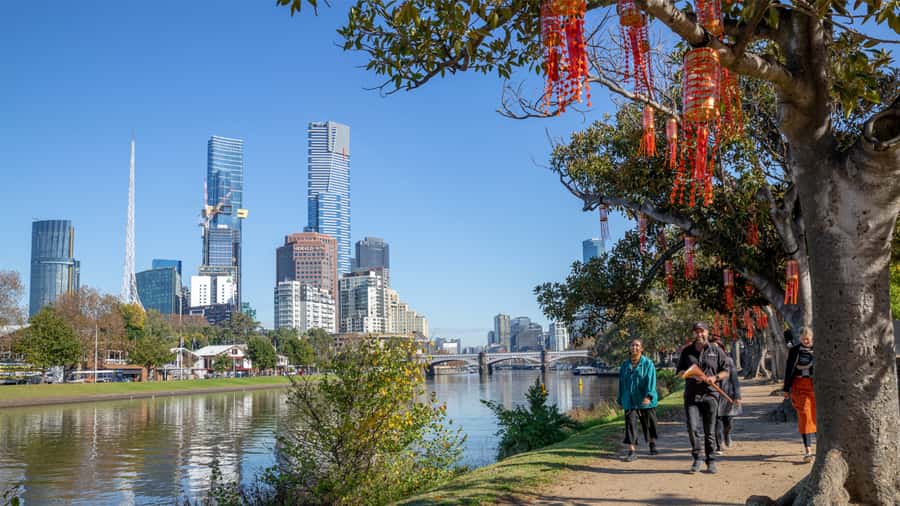
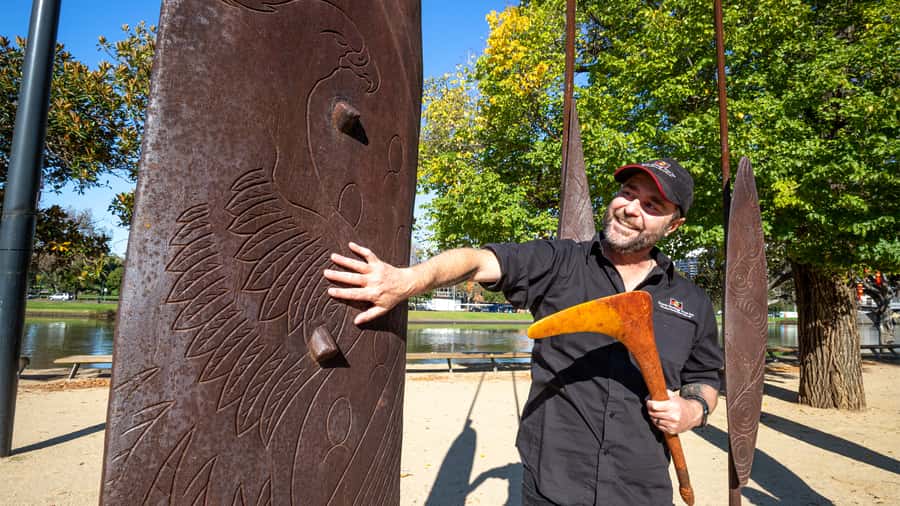
The first part takes you from Federation Square toward the Birrarung Wilam Aboriginal art installations. Birrarung Wilam translates as River Camp, a name that points to the river’s importance as a place of meeting, movement, and connection.
This is where the experience adds something a standard city tour may miss. You are not simply looking at public art as decoration. The installations become a starting point for discussing local Aboriginal identity and the continuing connection between the Kulin peoples and the river.
The exact walking route is brief. That is worth understanding before booking. One person described the activity as more of a cultural, hands-on session than a traditional walking tour, while another felt that not enough walking area was covered. I would set your expectations accordingly: you are getting a short guided walk between key sites, not a broad tour of Melbourne’s streets or riverbanks.
That limited route can be a strength if you want a focused introduction without spending half a day on your feet. It is less satisfying if you are hoping to cover many places or get a full survey of Melbourne’s Aboriginal landmarks.
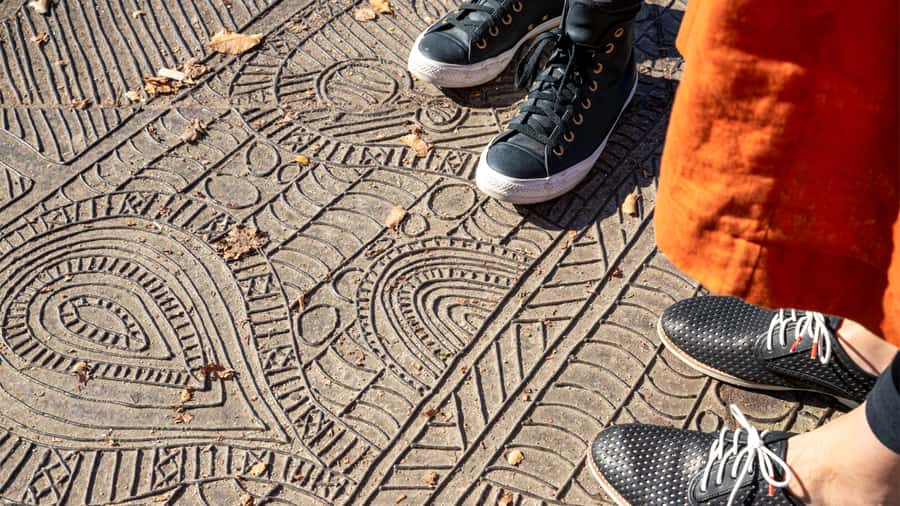
At Birrarung Wilam, the guide explains why the site matters to local Kulin peoples. The discussion also looks at how the area has changed over time as Melbourne developed. You get a chance to connect the present-day park and riverfront with the older cultural meaning of the place.
Understanding Birrarung Marr and the Kulin Nation
Birrarung Marr is explained as Beside the river of mists. The name itself helps you see the park differently. Instead of treating it as another modern open space near the city center, you begin to understand it as a place with Aboriginal meaning and a connection to the Birrarung.
The tour introduces the Kulin Nation, the group of Aboriginal nations connected with the Melbourne region. The material is intended as an introduction, so you should not expect a university course or a detailed account of every Kulin community. Still, this short explanation gives useful context for the art installations and the river setting.
I find this part especially useful for first-time visitors to Melbourne. Many people see Federation Square, the Yarra, and Birrarung Marr as modern city attractions. A guided cultural explanation adds another layer without asking you to leave the central tourist area.
The guide’s role is important. The strongest experience will be one where the guide explains the place clearly, welcomes questions, and makes the connection between objects, stories, and the setting easy to follow. One particularly positive account described a guide as enthusiastic, well informed, and good at answering questions. That kind of personal engagement can make a short tour memorable.
There is also a real risk of inconsistency. Some participants have found the commentary thin, awkward, or unclear, and one person said the guide did not introduce himself and struggled to answer questions. Since no guide names are provided in the booking information, you cannot choose a particular presenter in advance. I would book for the subject and format, but keep the possibility of a variable presentation in mind.
Returning to the Koorie Heritage Trust
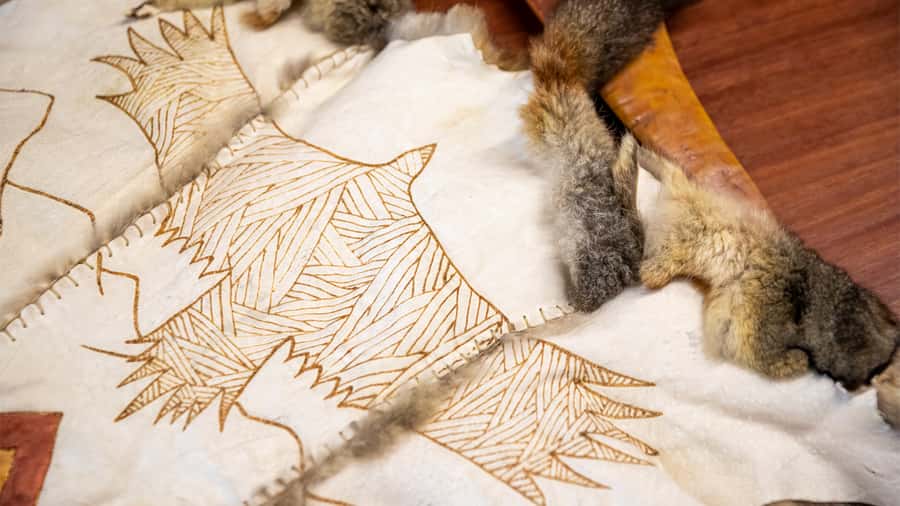
The tour’s indoor portion takes place at the Koorie Heritage Trust. Entry is included, and the session is designed to give you direct contact with Aboriginal tools and artifacts.
This is the part that gives the activity its strongest practical value. A short outdoor walk can introduce ideas, but handling objects helps you understand how Aboriginal communities used materials for hunting, protection, clothing, and daily life. The listed objects include tools, shields, and possum-skin cloaks.
The activity is guided, so you are not left to guess what you are seeing. You might learn how an item was made, what purpose it served, or how it relates to Aboriginal life in the region. The supplied information does not specify every object or the exact handling rules, so follow the guide’s instructions and treat the material with care.
The visit also gives you a more direct connection to the Koorie Heritage Trust than a quick look at a museum display. You are entering the institution that serves as the meeting point and then using its collection as part of the experience.
This inclusion is important when judging the price. If the tour includes both the outdoor art installations and the full hands-on Trust session, the $28 fee is reasonable for a one-hour guided cultural activity in central Melbourne. If the indoor visit is missed or rushed, the value drops sharply. One negative account specifically said the participant never entered the Trust, despite entry being included. If the indoor session is essential to your decision, confirm at the start that it is part of the planned hour.
More walking tours in Melbourne:
- Great Ocean Road Tour Plus Koalas, Forest Walk and Morning Tea
★ 4.5 · 1,068 reviews - Great Ocean Road 12 Apostles & Rainforest Walk with Morning Tea
★ 4.5 · 549 reviews - Melbourne Foodie Discovery Walking Tour
★ 5.0 · 530 reviews - Original Melbourne Lanes and Arcades Walking Tour
★ 5.0 · 389 reviews
What the one-hour format really gives you
An hour is enough to introduce a place, explain key terms, and present a small set of objects. It is not enough to cover Melbourne’s entire Aboriginal past, explore a wide section of the city, and allow long discussion at every stop.
I see the short format as useful for several kinds of visitors. You might be fitting the activity between lunch and an afternoon museum visit. You might have children who would lose interest during a longer tour. Or you might want a first introduction before deciding how much more Aboriginal cultural material to seek out in Melbourne.
The format is listed as suitable for all ages. That makes the hands-on objects a practical feature for families, though the experience still depends on children listening respectfully and following the guide’s directions. The small group should help keep the session manageable.
For adults with a strong interest in Aboriginal culture, the one-hour limit may feel too narrow. You will get an introduction to the Kulin Nation, Birrarung Marr, Birrarung Wilam, and selected artifacts, but not a full regional survey. I would treat it as a focused starting point rather than a complete account.
The daily 1:00 PM departure is simple, but it gives you little flexibility if you prefer early mornings or late afternoons. Check availability for the date you want, since the listed start time is fixed at 1:00 PM.
How much value do you get for $28?
At $28 per person, this is priced above a free city walking tour but below many longer guided cultural activities. The comparison is not entirely fair, since this experience includes entry to the Koorie Heritage Trust and a hands-on session with objects.
The fee makes the most sense if you value three things:
- A guide who can explain the meaning of central Melbourne sites
- A small group with room for questions
- Access to cultural objects in a guided setting
It makes less sense if your main goal is simply to walk around Birrarung Marr. You can see the riverfront and public art without paying for a tour, and the walking route itself is short. The fee is paying for interpretation and the Trust visit, not for distance covered.
The current score is 3.1 out of 5 from seven ratings. That mixed result reflects the key issue with this activity: the subject and format are promising, but the delivery may vary. Strong presentations have made the experience interesting and engaging. Poor presentations have left people feeling that the content was too slight for the price.
I would not book this expecting a polished, major city attraction with a tightly scripted performance. I would book it because the Koorie Heritage Trust and Birrarung Wilam offer meaningful places to learn about Melbourne’s Aboriginal heritage, and because the price is modest if both parts are delivered well.
Who will enjoy this most?
This activity suits you if you want a compact introduction to Melbourne’s Kulin heritage and prefer learning through both place and objects. It is also a sensible choice if you are staying near Federation Square and want an activity that requires no complicated transport.
Families may appreciate the one-hour length and hands-on element. First-time visitors can use it to place the Yarra and Birrarung Marr in a broader cultural setting. People who enjoy museums but do not want to spend an entire afternoon indoors will like the mix of outdoor art and the Trust’s collection.
You may want something else if you are seeking a long walk, extensive historical detail, or a tour with a guaranteed named guide. The activity covers a small area, and the guide’s communication skills can make a large difference.
I would also avoid treating this as a substitute for learning about all Aboriginal peoples of Australia. The focus is local, centered on Melbourne, the Birrarung, the Kulin Nation, and Koorie cultural material. That local focus is a virtue, but it also sets limits on the scope.
Practical advice before you go
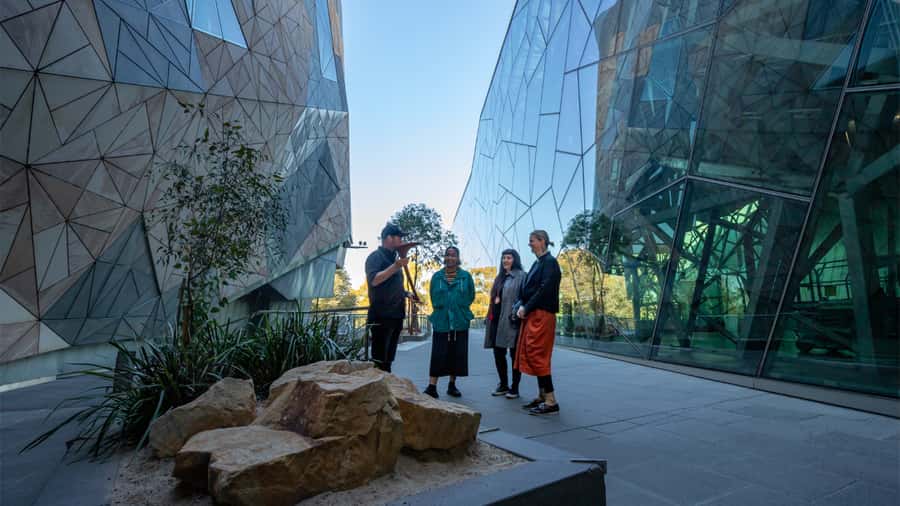
Arrive at the Koorie Heritage Trust in Federation Square with enough time to find Level 1 and check in at reception. The meeting point is inside The Birrarung Building, so do not assume the group will gather beside the river.
Wear shoes you can walk in comfortably. The route is not long, but you will be moving between Federation Square and Birrarung Wilam before returning to the Trust. Sunscreen and water are sensible because the first portion is outdoors.
Keep your questions ready. Ask about the meaning of Birrarung Wilam, the name Birrarung Marr, the Kulin Nation, and the purpose of the objects you see. A small group of 10 gives you a good chance to participate.
It is also reasonable to confirm the sequence at the beginning: outdoor walk first, then the guided Trust session. That simple check can help ensure you receive the full experience, especially since the indoor visit is part of the advertised inclusion.
Free cancellation is available up to 24 hours before the start for a full refund, and you can reserve now and pay later. Those options are useful if your Melbourne plans are still shifting.
Should you book the Birrarung Wilam Walk?
Book it if you want a short, local introduction to Melbourne’s Aboriginal heritage, especially if the combination of public art and hands-on objects appeals to you. At $28, the experience offers fair value when the guide provides clear cultural context and the Koorie Heritage Trust session takes place as planned.
Think twice if you want a long walking route or highly detailed historical coverage. The main weakness is not the subject matter, but the uneven delivery reported in the available ratings. Go with modest expectations, confirm the Trust visit, and see the hour as an opening lesson rather than the final word on Kulin culture.
FAQ
Where does the Aboriginal Heritage Walking Tour meet?
The tour meets at the Koorie Heritage Trust, on Level 1 of The Birrarung Building at Federation Square. Go to reception.
What time does the tour start?
The tour starts at 1:00 PM daily. Check availability for the date you want to book.
How long does the activity last?
The activity lasts one hour.
What language is the tour conducted in?
The tour is conducted in English with a live guide.
How large is the group?
The group is limited to 10 participants.
What places does the tour visit?
The tour begins at Federation Square, continues to the Birrarung Wilam Aboriginal art installations, and includes entry to the Koorie Heritage Trust.
What can I see or handle at the Koorie Heritage Trust?
The guided experience includes Aboriginal tools and artifacts, including tools, shields, and possum-skin cloaks.
Is the activity suitable for children?
The activity is listed as suitable for all ages.
What should I bring?
Bring comfortable shoes, sunscreen, and water. The first part of the activity takes place outdoors.
Can I cancel the booking?
You can cancel up to 24 hours in advance for a full refund. You can also reserve now and pay later.
Recently added around Melbourne
- Great Ocean Road: Kayaking with Seals Tour★ 4.6 · 3 reviews
- Happy Slam Australian Open Melbourne Sports Experience★ 5.0 · 3 reviews
- Coastal Magic – Melbourne 12 Apostles & Beyond★ 4.0 · 3 reviews
- From Melbourne: Mornington Peninsula Hop-On-Hop-Off Bus★ 5.0 · 3 reviews
- Werribee Mansion & Sovereign Hill Tour★ 3.7 · 3 reviews
- Bellarine Winery: Texas BBQ Platter Lunch with Wine★ 3.0 · 3 reviews
- Great Ocean Road Private Day Tour★ 5.0 · 3 reviews
- Melbourne City & Brighton Beach Boxes Helicopter Tour★ 4.5 · 3 reviews
Walking Tours, compared.

Ultimate Melbourne Walking Tour: History, Laneways & Culture
Read our review →
Great Ocean Road Tour Plus Koalas, Forest Walk and Morning Tea
Read our review →
Great Ocean Road 12 Apostles & Rainforest Walk with Morning Tea
Read our review →
Original Melbourne Lanes and Arcades Walking Tour
Read our review →Ultimate Melbourne Walking Tour: History, Laneways & Culture
Read our review →
Melbourne Lanes & Arcades Chocolate and Dessert Walking Tour
Read our review →Browse the lists this tour appears in