
Reviewed · WALKING TOURS
Melbourne: City Walking Tour with Local Guide
Melbourne’s best introduction may be found not on a grand boulevard, but down a narrow lane where a café, mural, bar, or tiny shop suddenly appears. This private walk with Paul Daffey brings that side of the city into focus, from Degraves Street and Hosier Lane to old arcades, Chinatown, the State Library, and Queen Victoria Market. I like the way the tour treats Melbourne as a living city rather than a checklist of monuments. I also like the practical freedom of free trams within the city, plus a tea or coffee break halfway through.
The main consideration is that the experience is designed around conversation and personal interests, not a fixed, tightly timed group route. That is a strength for many people, but if you want a fast march through every major sight, the two to four-hour length and flexible plan may feel less predictable. Melbourne’s weather can also change quickly, so comfortable shoes and a rain layer matter.
In This Review
- Key points to know before you book
- Why the private format suits Melbourne
- Degraves Street and Centre Place reveal the city’s creative side
- The Block Arcade and Royal Arcade connect Melbourne to the Gold Rush
- Chinatown adds food, migration, and a second route choice
- Pellegrini’s and Melbourne’s coffee identity
- Meyers Place and Flinders Lane show Melbourne after dark
- Hosier Lane and Aboriginal art bring art into the street
- State Library Victoria gives you a quiet change of pace
- Queen Victoria Market adds food and everyday Melbourne
- How much value do you get for $70?
- Timing, comfort, and meeting details
- Who should book this Melbourne walk?
- Should you book Paul Daffey’s Melbourne walking tour?
- FAQ
- How long does the Melbourne walking tour last?
- Who guides the tour?
- Is the tour private?
- Where can I meet the guide?
- Are trams and refreshments included?
- Is the tour wheelchair accessible?
Key points to know before you book
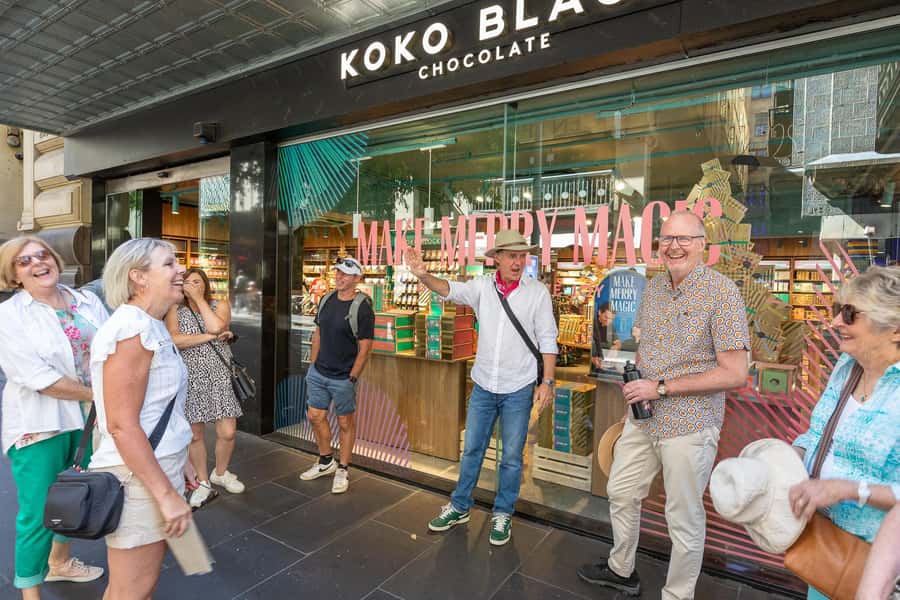
- Paul Daffey shapes the walk around you: He asks what interests you and can adjust the pace and focus.
- Melbourne’s laneways are the main event: Degraves Street, Centre Place, Hosier Lane, and nearby lanes reveal cafés, art, bars, and small shops.
- You get both grand and offbeat Melbourne: The route links nineteenth-century arcades and the State Library with street art, quirky stores, coffee spots, and Chinatown.
- The coffee stop is included: A cup of tea or coffee gives your feet a break and introduces Melbourne’s café culture.
- The private format costs $70 per person: That is easier to justify for couples, families, or small groups who value a custom route and direct attention.
- The walk is wheelchair accessible: Free trams are included, and hotel pickup or an agreed central meeting point can be arranged.
Why the private format suits Melbourne
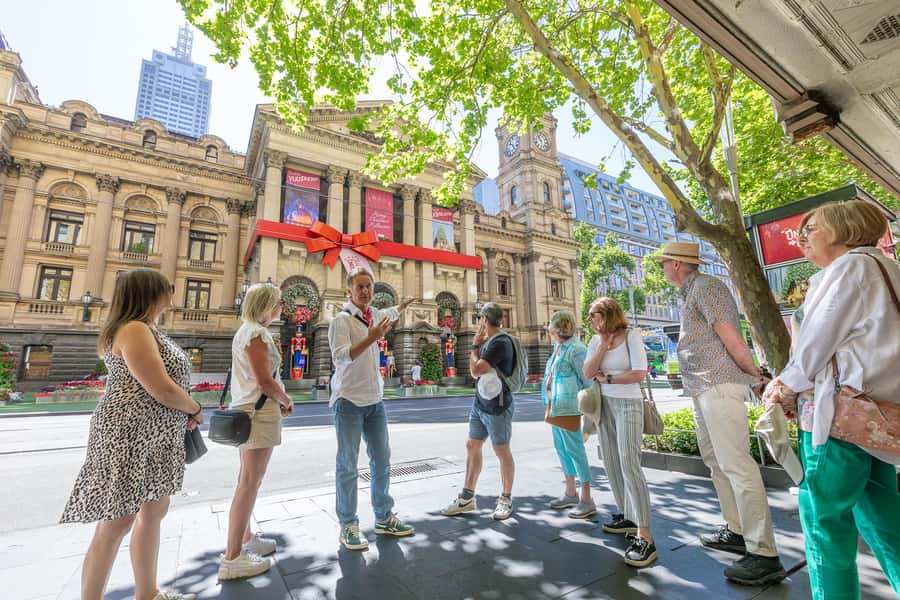
Melbourne rewards a guide who can explain connections. A laneway is not just a shortcut between two streets. An arcade is not simply a covered shopping passage. A coffee order can carry a little local history, and a tram ride can save your legs while showing you how central Melbourne works.
That is the appeal of this tour. Paul Daffey begins at your hotel foyer or another agreed location, then builds the walk around your interests. You might lean toward architecture and the Gold Rush era, or you might prefer cafés, street art, books, food, and bars. The published duration ranges from two to four hours, while one recent booking used the shorter two-hour format and found it long enough to cover history, laneways, and culture without becoming tiring.
I would choose the private format early in a Melbourne stay. It can give you a map in your head, useful restaurant ideas, and a clearer sense of which neighborhoods deserve more of your own time. Paul also offers suggestions for what to do after the walk, which makes the tour more useful than a one-off commentary session.
More walking tours in Melbourne:
- Ultimate Melbourne Walking Tour: History, Laneways & Culture
★ 5.0 · 1,451 reviews - Great Ocean Road Tour Plus Koalas, Forest Walk and Morning Tea
★ 4.5 · 1,068 reviews - Great Ocean Road 12 Apostles & Rainforest Walk with Morning Tea
★ 4.5 · 549 reviews
Degraves Street and Centre Place reveal the city’s creative side
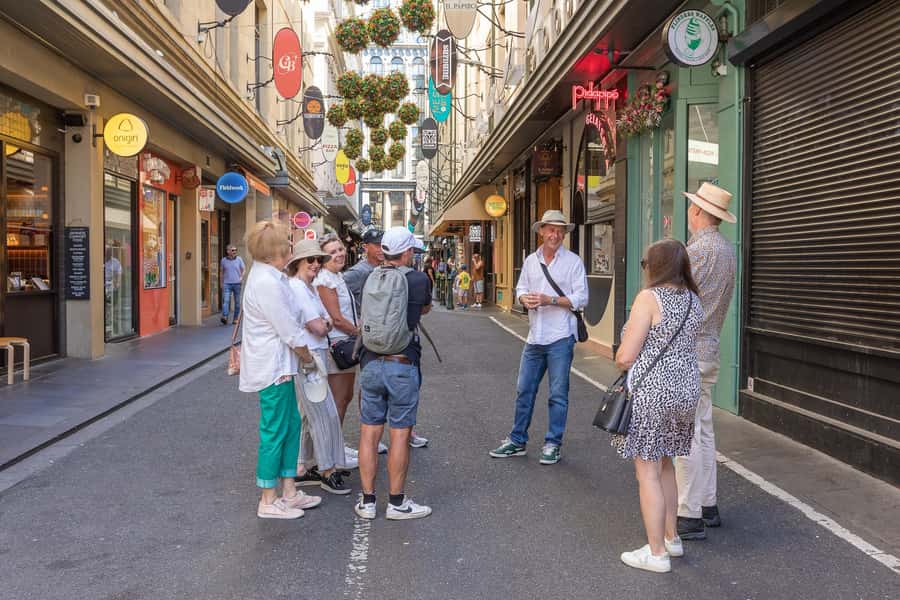
The walk moves quickly into central Melbourne’s laneway culture, especially around Degraves Street and Centre Place. These lanes once had a less attractive reputation. Today they are lined with cafés, restaurants, bars, galleries, fashion shops, and wall art.
The key benefit here is scale. Melbourne’s main streets can feel formal and spread out, but a lane brings you close to the details. You can look above shopfront level, check the paving and old façades, and see how dining and art have taken over spaces that were once overlooked.
The route is especially good for first-time visitors who might otherwise pass through the lanes without understanding their place in the city. Paul can point out the small details and help separate genuine local character from places designed only for a quick photograph.
Do not expect a wilderness walk or a quiet old quarter. These lanes are popular and can be crowded, particularly around cafés and restaurants. The attraction is their energy and variety, not solitude.
The Block Arcade and Royal Arcade connect Melbourne to the Gold Rush
Melbourne’s nineteenth-century prosperity left behind a set of grand commercial buildings. The Block Arcade and Royal Arcade let you step into that past without leaving the center.
Their polished interiors and old-world decoration make a useful contrast with the rougher, more modern feel of the laneways. Paul explains how the Gold Rush helped push Melbourne into the ranks of the world’s wealthiest cities in the nineteenth century. That context makes the architecture easier to read. You are not just looking at decorative ceilings and shop windows. You are seeing the confidence of a city that had money to spend.
These arcades are also practical stops. They offer shelter if Melbourne turns wet, and their compact layout makes them manageable for many walking abilities. The tour is wheelchair accessible throughout, although a private guide can still adjust the pace if you need more time.
I like this pairing because it gives you two versions of Melbourne within a few minutes: one informal and street-level, the other polished and ambitious.
Chinatown adds food, migration, and a second route choice
Melbourne’s Chinatown is described as one of the oldest in the Western world. It runs through the central city and offers a wide range of places to eat, from higher-end restaurants to dumpling houses.
The walk can pass through Chinatown after exploring Crossley Street, where Eurasian restaurants and bars add another layer to the city’s food culture. This section works best if you tell Paul what you actually want from it. You might be interested in restaurant history, architecture, dining suggestions, or simply finding a good place for a later meal.
The route also has a possible variation. Instead of heading through Crossley Street and Chinatown, Paul may take you south along Meyers Place, one of the original centers of Melbourne’s bar scene. This is a useful example of why the private format matters. You are not locked into the same emphasis for every group.
If you are hoping to eat a full meal during the tour, remember that the included refreshment is a cup of tea or coffee, not lunch. Food stops such as Pellegrini’s or Queen Victoria Market may be discussed or visited depending on the route and timing, but paid food is not included.
A few more Melbourne day trips worth comparing
- Great Ocean Road Tour w/ Deluxe Minibus & Top-Rated Guide
★ 4.8 · 2,644 reviews - Melbourne: Melbourne Cricket Ground (MCG) Guided Tour
★ 4.8 · 1,004 reviews - From Melbourne: Great Ocean Road Full-Day Guided Trip
★ 4.8 · 652 reviews - Melbourne: MCG and Australian Sports Museum Guided Tour
★ 4.7 · 638 reviews
Pellegrini’s and Melbourne’s coffee identity
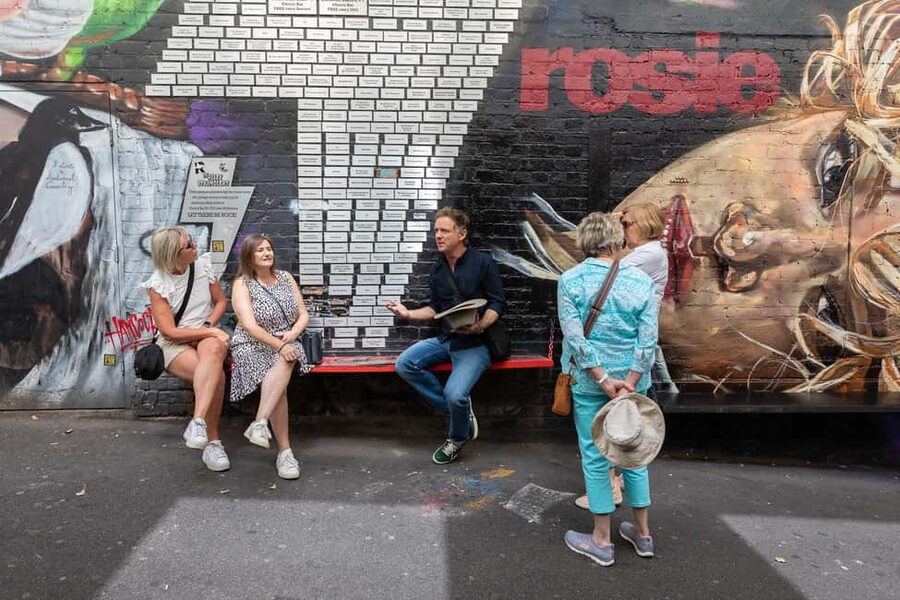
At the top of Bourke Street, you may stop near independent bookshops, Parliament House, Pellegrini’s, or other nearby points of interest. Melbourne’s coffee culture is part of the story here, not just a convenient way to pause.
Pellegrini’s helped put Melbourne on the road to becoming Australia’s coffee city by importing the first espresso machine. The restaurant is also known for lasagne and ravioli. The tour information presents it as a possible food stop, so you should treat it as an option rather than a guaranteed included meal.
The included tea or coffee break is a small feature, but a worthwhile one. It gives you a chance to sit down midway through a walking tour and ask questions while the city’s café habits make more sense. The tour also refers to Melbourne’s magic, a local coffee creation worth asking Paul about if coffee is high on your list.
This section suits anyone who wants food and drink explained through local customs. It may be less important to you if you do not drink coffee or prefer to spend the available time inside museums and civic buildings.
Meyers Place and Flinders Lane show Melbourne after dark
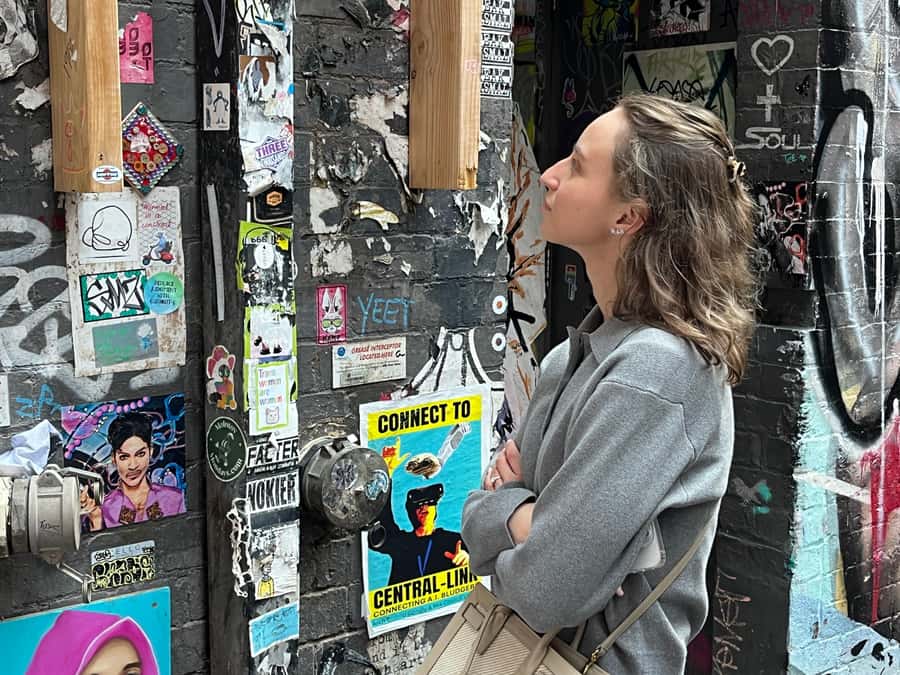
Meyers Place introduces the city’s bar culture. The lane is linked with Melbourne’s early bar scene, and the tour uses it to explain how the central city changed after business hours.
From there, the route can continue toward Flinders Lane. Once associated with the clothing and textile trade, Flinders Lane now has a strong restaurant identity, including many places that describe their food as modern Australian.
This is one of the more useful parts of the walk for planning your evenings. Melbourne’s dining scene is spread through small streets, and the best choice depends on what you want to eat, how formal you want the setting to be, and how much atmosphere matters to you. A guide who asks those questions can save you from choosing a restaurant at random.
The possible downside is simple: bars and restaurants are most interesting when open and active, but a daytime walking tour cannot reproduce the full evening mood. You get the setting and the story, then you can return later if a place catches your eye.
Hosier Lane and Aboriginal art bring art into the street
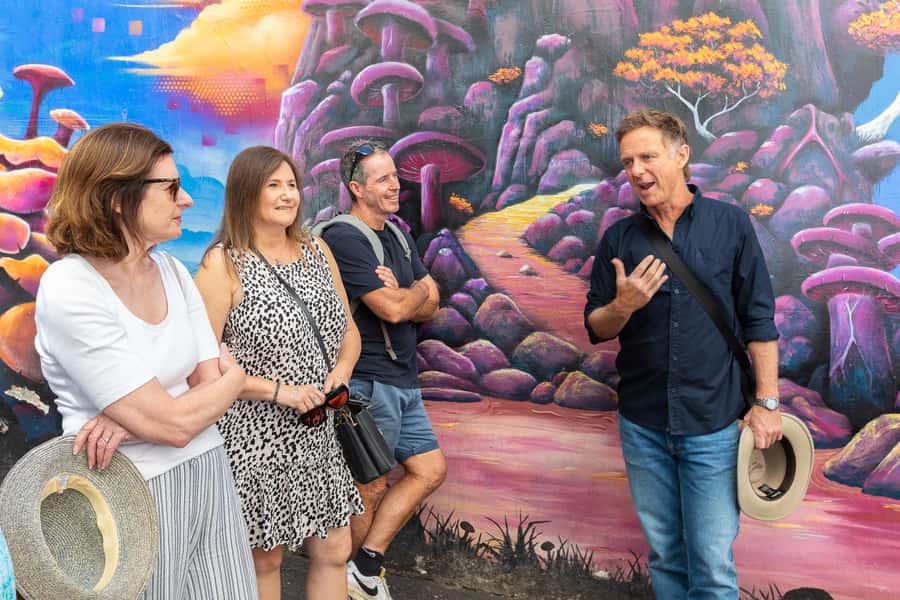
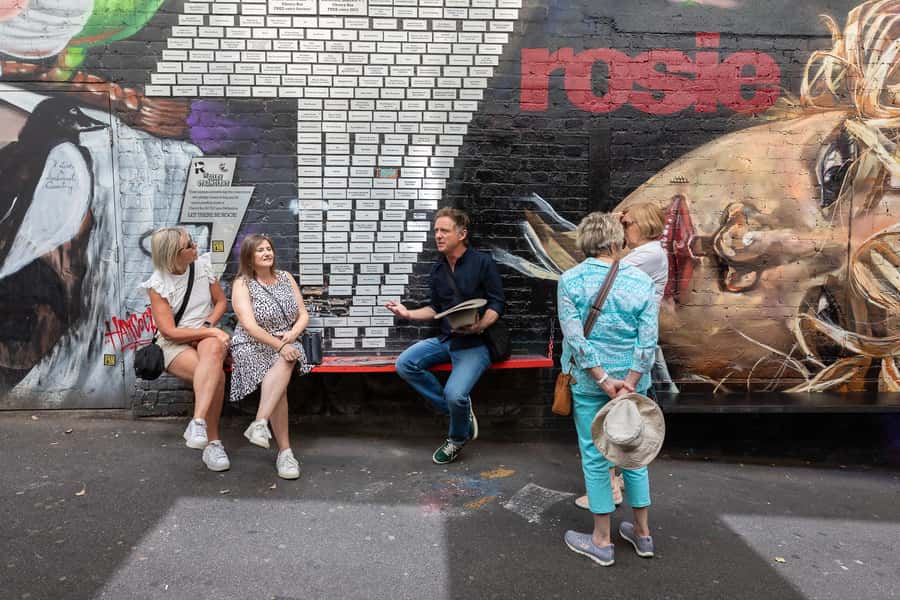
Hosier Lane is one of Melbourne’s best-known street-art locations. Here, the art is not tucked inside a formal gallery. It is painted directly onto the walls, and the scene changes over time.
The tour also places importance on Aboriginal art and the long human story of the country. That contrast is valuable. Melbourne’s modern street art can be loud, temporary, and constantly changing, while Aboriginal works connect you to cultures extending back thousands of years.
I would pay close attention during this part rather than treating it as a photo stop. Ask Paul about the difference between street art, commissioned work, and Aboriginal art, and ask where else you can continue that learning after the walk. The tour is not advertised as an entry ticket to a dedicated exhibition, and exhibitions or events with an admission charge are not included.
Hosier Lane can also be crowded and visually busy. If you need a calm, slow look at every wall, your private guide can help you pause, but the lane itself remains an active public place.
State Library Victoria gives you a quiet change of pace
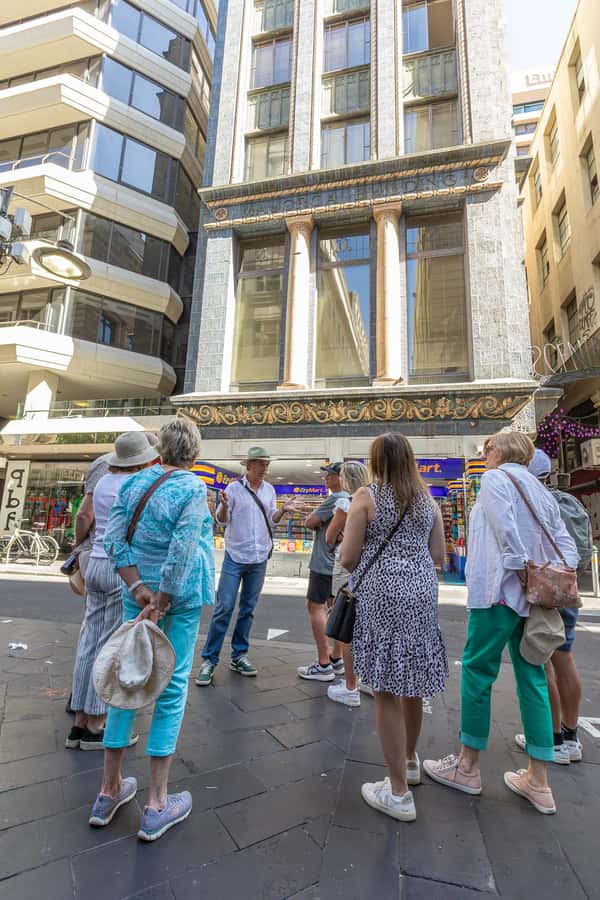
The State Library of Victoria is a strong counterpoint to the lanes. Its great domed reading room offers a sense of scale and calm after the close-up street scenes.
The library also helps explain Melbourne as a city of books and ideas. Melbourne was named a World City of Literature, second after Edinburgh, and the tour may include independent bookshops near the top of Bourke Street. That makes the library more than a handsome interior. It becomes part of a wider cultural picture.
A thirty-minute visit is enough to appreciate the building and its main spaces without turning the walking tour into a long indoor stop. If books, architecture, or city history matter to you, this may be one of the most rewarding parts of the route.
The guide can meet you at the library steps if that is more convenient than a hotel pickup. Other central meeting options include the steps at Flinders Street Station or the General Post Office in Bourke Street.
Queen Victoria Market adds food and everyday Melbourne
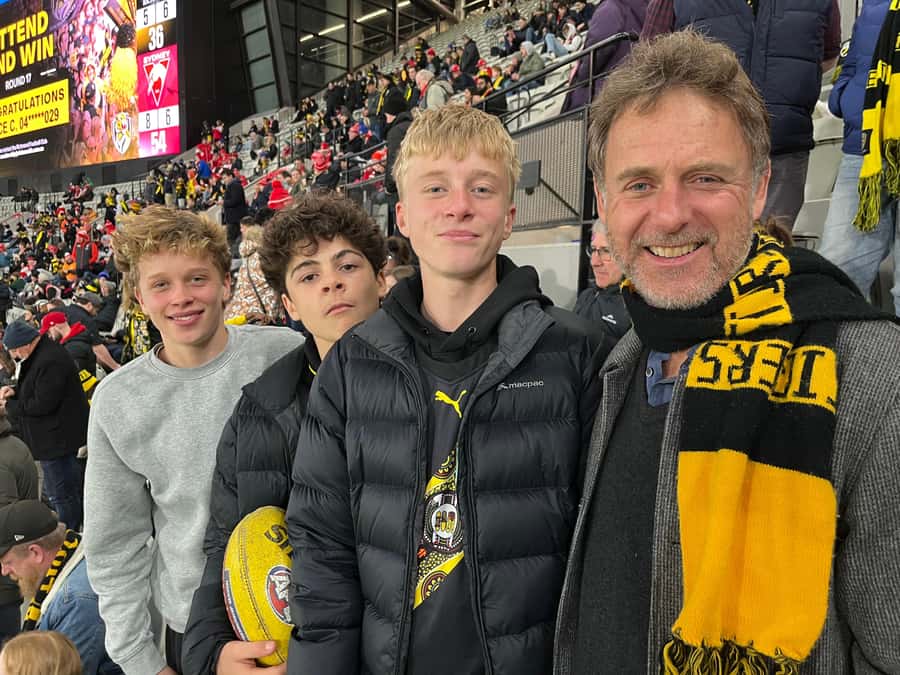
Queen Victoria Market brings the tour down from grand interiors and historic lanes to a working public market. The visit is listed at about an hour, making it one of the longer stops on the route.
You can expect mouth-watering food options and a more everyday side of Melbourne. A market is useful because it shows what the city buys, eats, and carries home, rather than presenting only its polished public face.
This stop may be especially helpful if you are planning self-catered meals, looking for edible souvenirs, or trying to understand Melbourne’s food culture beyond restaurant dining. Since the tour is private, tell Paul whether you want market history, food recommendations, or time to browse.
The market can add a lot to a longer four-hour version of the tour. On a shorter booking, though, the guide may need to choose between a fuller market visit and extra time in the laneways, library, or Chinatown. That is worth discussing when you book.
How much value do you get for $70?
At $70 per person, this is not the cheapest way to walk around central Melbourne. You can visit many of these streets and public places without paying an admission fee. The value comes from the private guide, the ability to set the pace, and the connections between places that can be easy to miss on your own.
For a couple or small group, the price is easier to justify because you are paying for direct attention rather than sharing a fixed script with a large crowd. It is also useful if you have limited time, mobility needs, or strong interests in art, books, food, architecture, or history.
The included tea or coffee is modest, and free trams are a practical bonus rather than a major financial saving. Paid exhibitions, events, meals, and additional purchases are not included.
I would consider this good value if you want an informed orientation and personal recommendations. I would skip it if you already know central Melbourne well and prefer to wander without a guide.
Timing, comfort, and meeting details
The activity is private, in English, and listed at two to four hours. Starting times depend on availability. You can meet Paul in your hotel foyer, which is the simplest choice, or arrange a central meeting point.
Wear comfortable shoes and clothes. Even though the route uses trams and includes indoor stops, it is still a walking experience with several hours on your feet.
Melbourne weather can turn quickly. Bring an umbrella or spray jacket if there is even a hint of cloud, and wear a hat on sunny days. Smoking is not allowed during the activity.
The full tour is wheelchair accessible. Free city trams are included, and the route can be adjusted through the private format. If you have particular access needs, state them when arranging the meeting point and route.
Who should book this Melbourne walk?
I would recommend it most strongly to first-time visitors who want more than postcard sights. It suits couples, families, and small groups who appreciate a guide responding to their interests instead of delivering the same speech to everyone.
It is also a good choice for people who want a gentle introduction to Melbourne’s city center, especially if you are curious about cafés, street art, Aboriginal art, architecture, books, food, or the bar scene.
The tour may be less suitable for anyone seeking a dedicated food tour, a museum tour, or a fixed historical lecture. It includes food and coffee context, but no meals are included. It also touches several cultural subjects without offering paid entry to exhibitions.
Should you book Paul Daffey’s Melbourne walking tour?
Book it if you want a personal first look at Melbourne and like the idea of adjusting the route as you go. Paul Daffey’s strengths are his flexibility, friendly manner, and ability to connect historical, social, and cultural details with places you can visit afterward.
Choose the two-hour version if you want a focused introduction without wearing yourself out. Choose closer to four hours if you want more time at Queen Victoria Market, the State Library, Chinatown, or the laneways.
At $70 per person, the tour earns its price through customization rather than included extras. If that sounds useful, especially early in your stay, I would book it and tell Paul in advance what matters most to you.
FAQ
How long does the Melbourne walking tour last?
The tour lasts between two and four hours, depending on the available starting time and the version you book. One recent booking used a two-hour format.
Who guides the tour?
The tour is led by Paul Daffey, an English-speaking local guide.
Is the tour private?
Yes. It is offered for a private group, allowing the guide to adjust the pace and focus around your interests.
Where can I meet the guide?
The preferred meeting point is the foyer of your hotel. You can also arrange another location, including the steps at Flinders Street Station, the General Post Office in Bourke Street, or State Library Victoria in Swanston Street.
Are trams and refreshments included?
Yes. Free city trams are included, along with one cup of tea or coffee during a break halfway through the tour.
Is the tour wheelchair accessible?
Yes. Wheelchair access is available throughout the tour. Comfortable shoes, comfortable clothes, and protection from Melbourne’s changeable weather are recommended.
Recently added around Melbourne
- Great Ocean Road: Kayaking with Seals Tour★ 4.6 · 3 reviews
- Happy Slam Australian Open Melbourne Sports Experience★ 5.0 · 3 reviews
- Coastal Magic – Melbourne 12 Apostles & Beyond★ 4.0 · 3 reviews
- From Melbourne: Mornington Peninsula Hop-On-Hop-Off Bus★ 5.0 · 3 reviews
- Werribee Mansion & Sovereign Hill Tour★ 3.7 · 3 reviews
- Bellarine Winery: Texas BBQ Platter Lunch with Wine★ 3.0 · 3 reviews
- Great Ocean Road Private Day Tour★ 5.0 · 3 reviews
- Melbourne City & Brighton Beach Boxes Helicopter Tour★ 4.5 · 3 reviews
Walking Tours, compared.

Ultimate Melbourne Walking Tour: History, Laneways & Culture
Read our review →
Great Ocean Road Tour Plus Koalas, Forest Walk and Morning Tea
Read our review →
Great Ocean Road 12 Apostles & Rainforest Walk with Morning Tea
Read our review →
Original Melbourne Lanes and Arcades Walking Tour
Read our review →Ultimate Melbourne Walking Tour: History, Laneways & Culture
Read our review →
Melbourne Lanes & Arcades Chocolate and Dessert Walking Tour
Read our review →Browse the lists this tour appears in