
Reviewed · MELBOURNE
The Explorer – Cranbourne Gardens
The best thing about The Explorer at Cranbourne Gardens is simple: it lets you see far more of this huge Australian Garden without wearing yourself out. In 25 minutes, an open-air minibus travels from the Red Sand Garden along the east coast section, then loops back through Peppermint Garden with live commentary from the driver-guide.
I like the quick overview and the easy access. The ride helps families, older visitors, and anyone with limited mobility get a proper sense of the gardens before deciding where to walk. I also like the commentary, which covers native plants, garden design, history, and cultural meaning rather than giving you a silent drive-by.
The main drawback is the short running time. This is an introduction, not a full day out, and the bus cannot replace time on foot among the plant displays. Check the school holiday pricing carefully too, since children ride free on the Kids Explorer Bus during those periods, but a booking platform may not always apply that offer correctly.
In This Review
- Key points to know before you ride
- Why The Explorer makes sense at Cranbourne
- Starting at the Visitor Centre
- Red Sand Garden sets the tone
- Along the east coast section
- Howson Hill and Ian Potter Lake
- The Arid Garden and Dry River Bed
- Returning through Peppermint Garden
- What the live commentary adds
- A good fit for families and mobility needs
- Is $10.76 good value?
- Timing, weather, and practical planning
- Who should book The Explorer?
- Should you book The Explorer at Cranbourne Gardens?
- FAQ
- How long does The Explorer at Cranbourne Gardens last?
- How much does the experience cost?
- Where does the tour meet?
- What areas does the route visit?
- Is live commentary included?
- Can I hop off the bus?
- Do children ride free?
- Is the experience suitable for visitors with mobility issues?
- Can I cancel for a refund?
Key points to know before you ride
- A 25-minute overview of a 15-hectare garden: The Explorer saves time and gives you a clear sense of the Australian Garden’s scale.
- Red Sand Garden and Dry River Bed: These are among the most distinctive parts of the route, showing how Australian plants and natural forms shape the garden design.
- Live commentary from the driver-guide: The narration covers plant life, cultural meaning, garden history, and the ideas behind the displays.
- A practical choice for limited mobility: The bus lets your group see more of the gardens without relying on long walks between areas.
- Kids ride free during school holidays: The special Kids Explorer Bus is designed for families, though you should confirm the correct fare before booking.
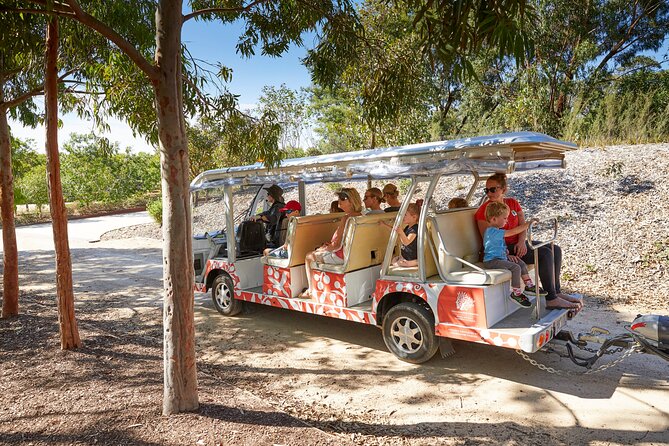
- Small-group feel: The bus carries a maximum of 25 people, which keeps the ride more personal than a large sightseeing coach.
Why The Explorer makes sense at Cranbourne
Cranbourne Gardens is not a compact city garden where you can see everything from one central path. The Australian Garden covers about 15 hectares, with different plant communities, water features, hills, dry zones, and carefully shaped garden rooms spread across a broad area.
That size is the reason to consider the bus. You can walk the whole day, but you may spend much of your energy simply getting from one display to the next. The Explorer gives you a useful first look, then lets you choose where to spend your limited walking time.
I would especially recommend riding early in your visit. You get an outline of the garden, hear the names of areas you might otherwise miss, and can then return to the sections that interest you most. If you are stopping at Cranbourne on the way to Phillip Island, the ride is also a sensible way to see the main character of the garden without turning the stop into a long expedition.
The open-air design helps you stay connected to the setting. You are not looking through a coach window at a series of passing plants. You can see the garden around you, hear the guide, and get a better feel for how the paths, water, hills, and plantings fit together.
Other Mornington Peninsula days people pair with this one:
- Full-Day Penguins and Wildlife Nature Experience from Melbourne
★ 5.0 · 150 reviews - Peninsula Hot Springs Spa Experience and Express Transfer Shuttle
★ 5.0 · 131 reviews - Cape Woolamai Sightseeing Cruise from San Remo
★ 4.5 · 72 reviews
Starting at the Visitor Centre
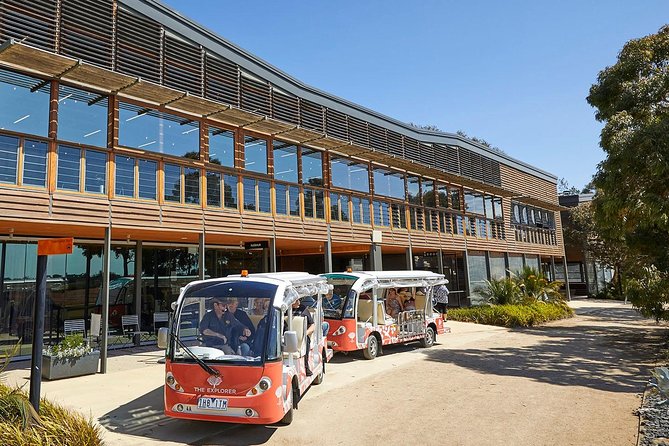
The ride begins at Royal Botanic Gardens Cranbourne, at Ballarto Road and Botanic Drive. The ticket redemption point is at the gardens, and transport to the site is not included, so you need to arrange your own way there.
Once you arrive, allow a little time to get oriented before boarding. The garden is large, and the bus is most useful when you treat it as part of a wider visit rather than as the entire experience.
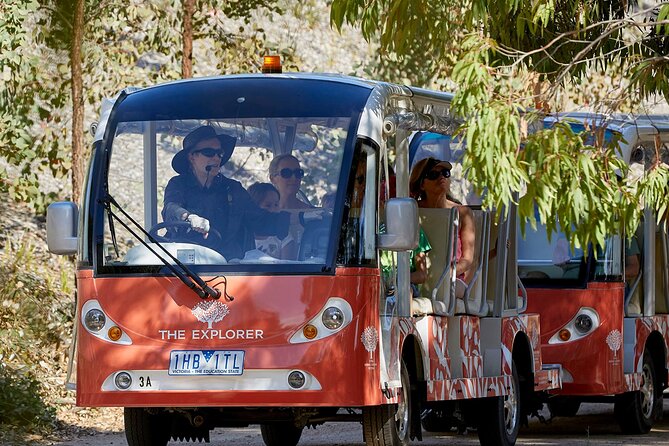
The tour has a maximum of 25 passengers. That is small enough for the driver-guide’s commentary to feel connected to the group, while still giving the service enough capacity for families and day visitors.
The driver handles both the route and the explanation. One driver named Peter received particular praise for his plant knowledge and friendly manner, while another account describes the host as funny and entertaining. Drivers may vary, but the format clearly depends on a personal, spoken presentation rather than a recorded audio track.
Red Sand Garden sets the tone
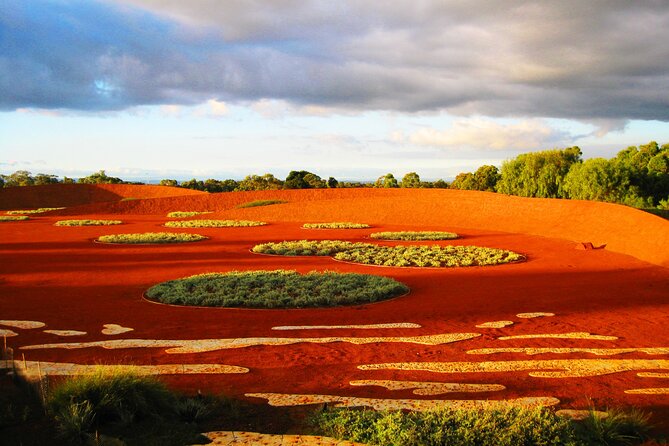
The route begins at the Red Sand Garden, one of the most memorable features named on the tour. The red earth gives this section a strong Australian sense of place, while the planting shows how native species can be arranged as a deliberate garden rather than left as untouched bush.
This is a good opening stop because it introduces one of the central ideas at Cranbourne: Australian plants can be admired for their form, color, texture, and relationship to the soil. You are not only looking at individual species. You are seeing how gardeners use local materials and native plants to express the character of the country.
The bus gives you the broad view first. If the red earth and plant combinations catch your attention, you can spend more time here on foot after the ride. The limitation is that a moving vehicle cannot give you the same close look at leaves, flowers, bark, or small design details. Bring the ride into your plan as a preview.
Along the east coast section
From the Red Sand Garden, The Explorer travels along the east coast section of the Australian Garden. The route is meant to show a changing series of Australian plant environments, with the commentary helping you understand what you are seeing.
This is where the driver’s explanation matters most. Native gardens can be difficult to read without context. A patch of dry planting, a water feature, or a particular grouping of trees may look attractive, but you might not know why it has been placed there. The live narration adds the link between the plants and the larger story of Australian nature.
You may hear about garden history, the cultural significance of the setting, and the way the displays interpret the natural world. That mix gives the ride more substance than a basic shuttle. You are not simply being moved from point A to point B.
For keen gardeners, this part of the ride can help with ideas for planting combinations and garden structure. For families, the changing scenes prevent the journey from feeling like a long, static lecture. The open-air bus also keeps the experience lighter and more informal.
Same city, a completely different day out:
- Peninsula Hot Springs and Beach Boxes Day Trip from Melbourne
★ 4.5 · 64 reviews - Mornington Peninsula Sightseeing and Bay Cruise
★ 4.5 · 51 reviews - Arthurs Seat Eagle: Scenic Gondola Ride
★ 4.7 · 44 reviews - Mornington Peninsula Self-Guided Bike Tour | Food & Wine Region
★ 5.0 · 44 reviews
Howson Hill and Ian Potter Lake

Howson Hill is another named highlight along the route. From a raised point such as this, you can better understand the scale and shape of the Australian Garden. Instead of seeing one planting bed at a time, you get a sense of how the garden’s sections relate to one another.
That broad view is valuable if you are visiting for the first time. It gives you a mental map, which can make your later walk less random. You can also judge how much ground you want to cover on foot, an important consideration on a warm day.
Ian Potter Lake adds a different mood. Water changes the feel of a garden, and the lake gives the route a calmer visual pause after the drier and more earth-focused displays. It also shows that the Australian Garden is not built around one single type of environment.
I would not expect a long stop for quiet sitting or detailed photography. The tour keeps moving, and the bus ride is designed to give you an overview. If the lake is a favorite part, note its location and return later if you have time.
The Arid Garden and Dry River Bed
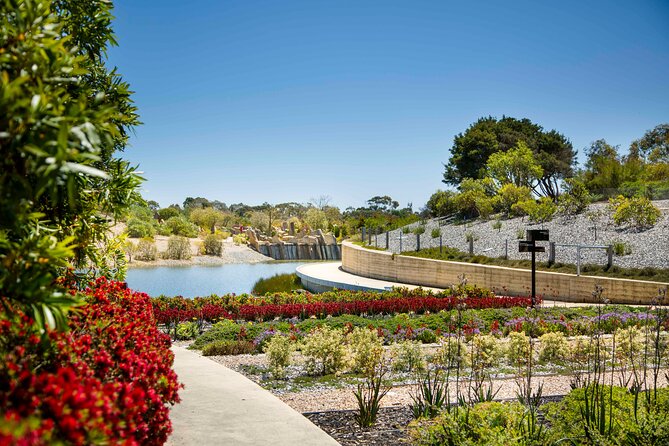
The Arid Garden is one of the clearest examples of the garden’s focus on Australian plant life. This section highlights plants adapted to dry conditions and shows how a garden can create interest without relying on lush, densely planted beds.
For you, the value is both visual and practical. The display can help you notice the shapes and textures that make dry-climate plants attractive, especially if you are interested in creating a water-conscious garden at home. The driver’s interpretation gives meaning to the planting rather than leaving you to guess at its purpose.
The Dry River Bed continues that dry-country theme. Its form suggests the path water may take through a dry environment, turning geology and water movement into part of the garden design. It is a useful reminder that native gardening is not just about collecting Australian species. It is also about building a setting that reflects local conditions.
These displays may be less immediately colorful than a formal flower garden. That is part of their appeal, but it also explains why some people will get more from the ride than others. If you prefer traditional beds packed with seasonal blooms, this experience has a more restrained and naturalistic style.
Returning through Peppermint Garden
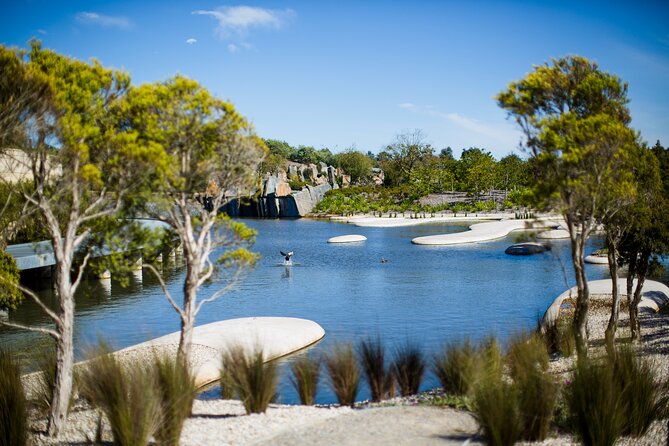
The route winds back through Peppermint Garden, giving you a final look at another distinct planting area before returning. The loop structure works well because you see the garden from more than one direction, and the return journey reinforces the overall layout.
Peppermint Garden also helps balance the route. After the red earth, dry planting, lake, and river-bed forms, the return section gives you another plant community to consider. The commentary ties these areas together and explains how the garden presents Australian flora through designed spaces.
At this point, you should have enough information to decide what deserves a closer look. The included ticket allows flexibility to hop off at various stops within the Australian Garden. The exact stop pattern and timing are not specified, so ask the operator on arrival if you want to plan a hop-off visit around particular sections.
What the live commentary adds
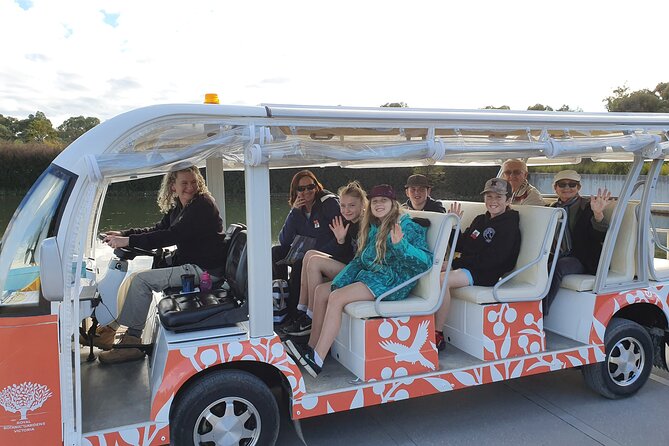
The commentary is one of the strongest parts of the experience. A bus ride through a botanical garden can feel thin if it offers only names and directions. Here, the guide covers plants, the garden’s past, cultural meaning, and the ideas behind the displays.
That broad approach suits different kinds of visitors. A gardener can listen for plant and design details. A first-time visitor can learn why the garden looks different from a standard ornamental park. Children may respond best to the driver’s stories, humor, and the changing sights outside the bus.
The personal style matters too. Peter, one of the drivers praised by name, was described as friendly and especially well informed about the plants and history. Another account singled out the host’s humor. You should expect the tone to depend partly on the individual driver, but the service is built around direct interaction.
I like this better than trying to read a guidebook while walking. You can watch the garden and listen at the same time. The tradeoff is that commentary is less flexible than a private tour. The driver has to keep the bus moving and address the whole group, so you may not get an answer to every individual plant question.
A good fit for families and mobility needs
Families get real value from the ride. Children may not be ready for a long walk across a large botanic garden, but a moving bus adds variety and keeps the visit active. During school holidays, children ride free on the Kids Explorer Bus, a family-focused version designed around the sights, sounds, and scents of the Australian Garden.
Before paying, check that the free-child offer is properly applied. One booking problem involved a child being charged despite the school holiday offer, followed by a request for a refund. That issue appears to have involved the booking process rather than the garden itself, but it is a useful reason to confirm the fare before final payment.
The bus is also a smart choice if someone in your group has mobility issues. One account describes a mother seeing much more of the gardens because of the ride. The gardens also have level walking paths, but flat paths do not remove the distance problem. The Explorer reduces the amount of ground you need to cover.
Service animals are allowed, and most people can participate. The experience is not described as requiring a special level of fitness. Still, if you need precise information about boarding, seating, or mobility equipment, contact the provider before arrival, since those details are not provided here.
Is $10.76 good value?
At $10.76 per person, I consider The Explorer a reasonable add-on to a visit that already takes you to Cranbourne Gardens. You are paying for a 25-minute ride, a driver-guide, live commentary, and a time-saving overview of a large garden.
The value is highest when you are short on time, visiting with children, or unable to walk long distances. It can also save you from spending the first hour wandering without a plan. After the ride, you can choose your walking route with more confidence.
The value is lower if you want a slow, close study of plants or already know the garden well. A 25-minute tour cannot give you extended time at every display. Keen gardeners may still want a longer walk afterward, especially around the areas that interest them most.
The ticket does not include hotel pickup, drop-off, or transportation to the gardens. That is normal for a short garden activity, but you need to budget for getting to Ballarto Road and Botanic Drive separately.
The service has received a 4.8 rating from 135 ratings, with 97 percent recommending it. Those figures fit the experience’s main strengths: a helpful overview, a friendly driver, and better access to a large site. I would treat the strong rating as encouragement, not a reason to skip your own planning. The ride works best when you know what you want from it.
Timing, weather, and practical planning
The experience lasts about 25 minutes, so it is easy to fit into a broader day at Cranbourne Gardens. If you are combining it with another outing, such as Phillip Island, it offers a quick look without taking over your schedule.
It is an outdoor activity and requires good weather. If poor weather cancels the ride, you are offered another date or a full refund. You can also cancel for a full refund if you do so at least 24 hours before the start time. Cancellations or changes made less than 24 hours ahead are not refunded or accepted.
The best plan is to keep your expectations realistic. This is not a hop-on, hop-off city bus with unlimited touring. It is a short garden circuit with some flexibility to get off at stops within the Australian Garden. Ask about the day’s operating pattern if a particular stop is important to you.
The gardens have a cafe, which helps if you plan to stay longer after the ride. A pleasant approach is to ride first, take a break, then walk the sections that caught your eye. That gives you both the broad view and the close-up experience.
Who should book The Explorer?
I would book this for families, first-time visitors, older people, anyone with limited mobility, and people fitting Cranbourne Gardens into a tight day. It is also worthwhile for gardeners who want an introduction to the plant communities and design ideas before walking.
I would be less likely to book it if I had a full day, strong walking ability, and a clear plan to explore every path at my own pace. The bus gives you useful context, but walking remains the way to notice the small plant details.
Nature lovers should appreciate the range of settings, from red earth and dry planting to the lake and peppermint displays. The experience also suits visitors who want to learn about Australian flora without turning the visit into a formal lecture.
Should you book The Explorer at Cranbourne Gardens?
Yes, if you want an efficient first look at a very large garden. The combination of a small bus, live commentary, and varied stops makes the ride more than a simple transfer.
Book it with two cautions: confirm the child fare during school holidays, and do not mistake the 25-minute circuit for a complete visit. Use The Explorer to get your bearings, then walk the sections that appeal to you. At $10.76, that is a modest price for saving energy and making better use of your time.
FAQ
How long does The Explorer at Cranbourne Gardens last?
The tour lasts approximately 25 minutes.
How much does the experience cost?
The listed price is $10.76 per person.
Where does the tour meet?
You meet at Royal Botanic Gardens Cranbourne, at Ballarto Road and Botanic Drive, Cranbourne VIC 3977, Australia.
What areas does the route visit?
The route includes the Red Sand Garden, Howson Hill, Ian Potter Lake, the Arid Garden, the Dry River Bed, and a return through Peppermint Garden.
Is live commentary included?
Yes. A driver-guide provides live commentary during the ride, with information about plants, garden history, cultural meaning, and nature.
Can I hop off the bus?
The ticket includes flexibility to hop off at various stops within the Australian Garden. Ask about the day’s stop arrangements when you arrive, since exact timing is not specified.
Do children ride free?
Children ride free on the Kids Explorer Bus during school holidays. Check the fare shown during booking, as an incorrect child charge may need to be queried.
Is the experience suitable for visitors with mobility issues?
Yes. The bus is designed to help visitors who may find it difficult to walk across the large gardens. Service animals are allowed, and most people can participate.
Can I cancel for a refund?
Yes. You can cancel at least 24 hours before the start time for a full refund. Cancellations or changes made less than 24 hours before the start time are not accepted, and poor-weather cancellations offer a different date or a full refund.
Recently added around Mornington Peninsula
- Port Phillip Bay Snorkeling with Sea Dragons★ 5.0 · 3 reviews
- Depart Peninsula: Mornington Wine & Hot Springs Tour with Lunch★ 5.0 · 3 reviews
- Mornington Peninsula Coastal Discovery Tour from Melbourne★ 5.0 · 4 reviews
- Self-Guided Point Nepean National Park Bike Hire★ 4.5 · 5 reviews
- Melbourne: Mornington Peninsula Southern Coast Discovery★ 5.0 · 6 reviews
- 2 hour Seals & Seadragon Swim★ 4.5 · 8 reviews
- Small Group: Ultimate Mornington Peninsula Food and Wine Day★ 5.0 · 9 reviews
- Montalto Vineyard: Mornington Peninsula Discovery Wine Tasting and Lunch★ 5.0 · 10 reviews